
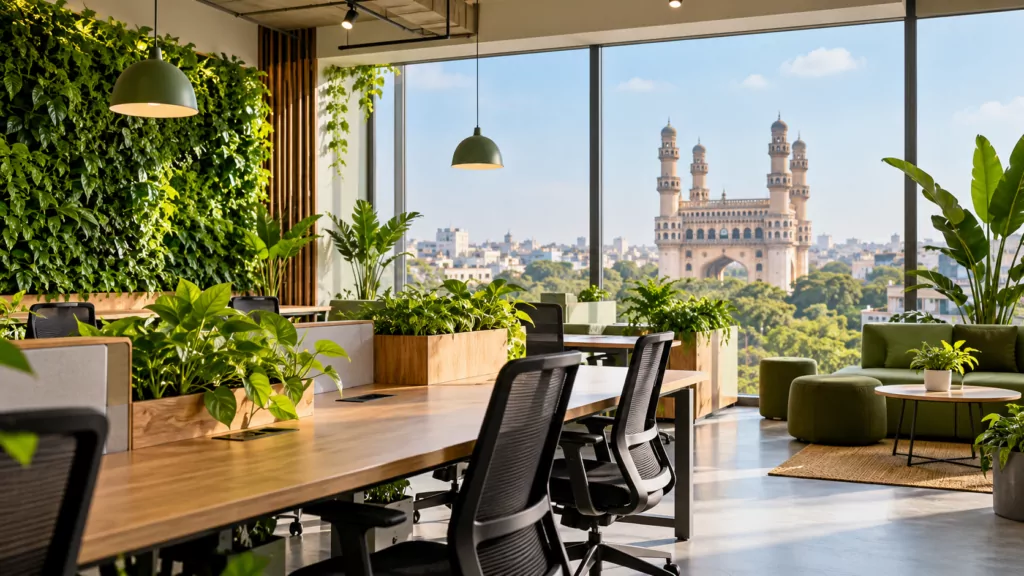
The way Hyderabad works is changing, and so is what professionals expect from their office environment. A green coworking space is no longer a nice-to-have feature. It has become a deciding factor for startups, freelancers, and enterprises that care about their environmental footprint as much as their bottom line.
According to a 2025 India Commercial Real Estate Sustainability Report, nearly 64% of companies in Hyderabad now consider environmental certifications before signing a workspace lease. That number has jumped 18% since 2023, driven largely by the tech corridor stretching from HITEC City to the Financial District. The demand is real, the shift is happening, and the businesses that align with it are gaining a competitive edge.
This is where @Work Coworking Space fits into the picture. With locations near Cyber Towers and across Gachibowli, @Work has built workspaces that prioritize energy efficiency, waste reduction, and responsible resource use without sacrificing the premium infrastructure that growing businesses need.
Key Takeaway: A green coworking space combines sustainable building practices, energy-efficient operations, and eco-conscious community standards to reduce environmental impact while keeping productivity high.
What Makes a Coworking Space Truly “Green”?
A green coworking space goes beyond placing a recycling bin in the pantry. It involves deliberate choices in construction materials, energy sourcing, water management, and daily operations that collectively lower the carbon footprint of every member who works there.
Sustainable coworking typically includes LED lighting systems, motion-sensor climate control, low-VOC paints on walls, and furniture sourced from certified sustainable manufacturers. In Hyderabad, where summer temperatures regularly push past 40 degrees Celsius, energy-efficient HVAC systems alone can cut a workspace’s electricity consumption by up to 30%.
The best green coworking spaces in Hyderabad also integrate natural ventilation where possible, use solar panels for partial energy needs, and implement strict waste segregation programs. These are not cosmetic changes. They represent a fundamental rethinking of how shared office environments should operate in a city that is growing as fast as Hyderabad.
Businesses that choose flexible coworking plans in Hyderabad with green credentials often report lower operating stress and higher employee satisfaction, because the workspace itself reflects the values their team cares about.
Why Hyderabad Needs Green Coworking Spaces Now
Hyderabad’s IT and business districts, particularly HITEC City, Madhapur, and Gachibowli, are among the fastest-growing commercial zones in India. With that growth comes a significant environmental cost. Office buildings in these areas account for a substantial share of the city’s total energy consumption.
Traditional office leases in the Financial District or near the Oracle campus often lock businesses into buildings that were designed without sustainability in mind. Older commercial properties along Outer Ring Road use outdated cooling systems, single-pane glass, and fluorescent lighting that waste enormous amounts of energy every single day.
Green coworking spaces address this problem at scale. Instead of each company individually retrofitting its leased floor, a single sustainable coworking facility serves dozens of businesses under one energy-optimized roof. The shared model itself is inherently more resource-efficient. Fewer individual offices mean fewer redundant reception areas, server rooms, and pantry setups consuming power.
According to workspace trends in Hyderabad, companies near IKEA Hyderabad and the Kondapur tech belt are actively seeking workspaces that align with ESG (Environmental, Social, and Governance) frameworks. For these businesses, working from a green coworking space is not just ethical. It is a compliance requirement.
How Sustainable Workspaces Improve Productivity and Well-Being
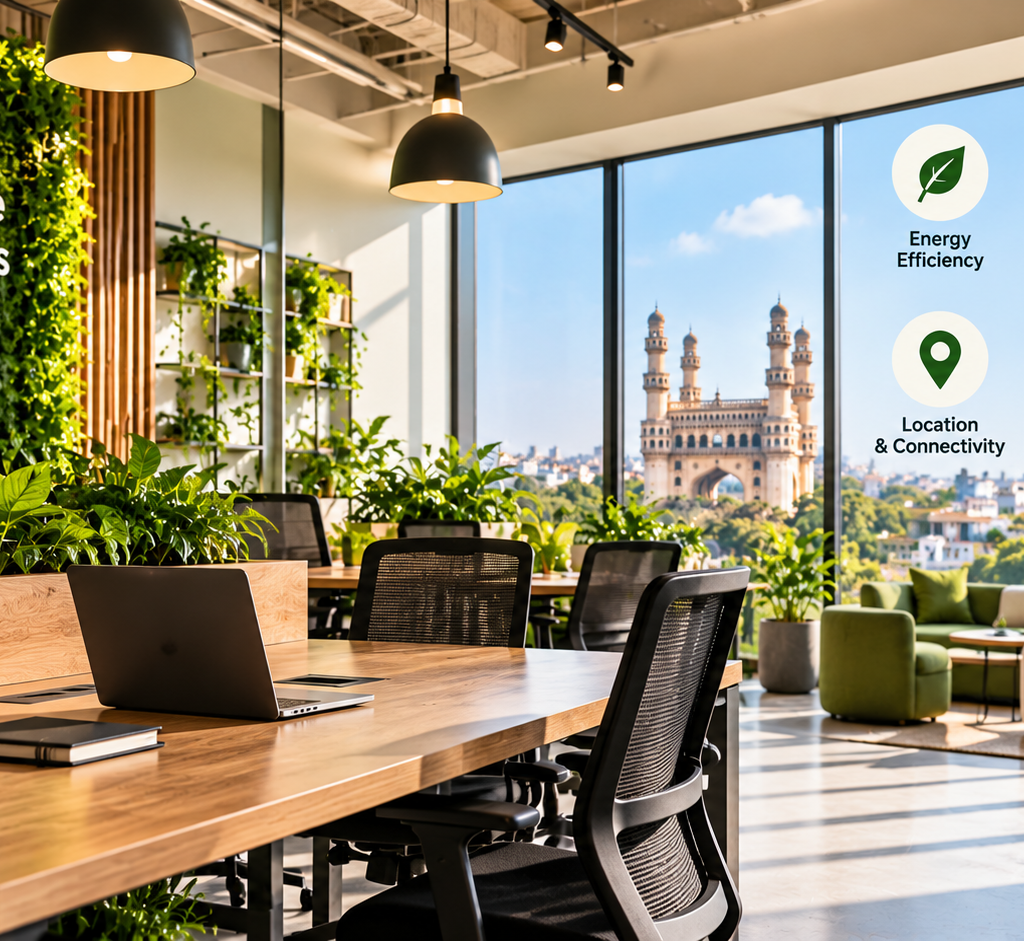
The connection between a green workspace and employee performance is well-documented. Natural lighting, better air quality, and biophilic design elements like indoor plants and natural wood finishes directly affect focus, mood, and energy levels throughout the workday.
A 2024 study on workplace environments in Indian metros found that employees working in green-certified offices reported 22% fewer sick days and 15% higher self-reported productivity compared to those in conventional setups. The reasons are straightforward. Cleaner air means fewer headaches. Natural light regulates circadian rhythms. Thoughtful acoustics reduce distractions.
At @Work Coworking Space, these principles show up in tangible ways. High-speed fiber internet keeps teams connected without the energy waste of outdated networking hardware. 24/7 access means members use the space when they are most productive rather than conforming to rigid building schedules. Dedicated parking reduces the stress of Hyderabad’s commute, and well-ventilated common areas make collaboration comfortable rather than draining.
Startups looking for ready-to-move offices increasingly prioritize these wellness-linked features alongside standard amenities. The workspace is no longer just a place to sit. It is an active contributor to how well your team performs.
What to Look for When Choosing a Green Coworking Space in Hyderabad
Not every workspace that markets itself as “green” meets genuine sustainability standards. Here is what to evaluate before committing to a membership or lease.
First, ask about energy certifications. Buildings with IGBC (Indian Green Building Council) or LEED ratings have undergone third-party assessment of their environmental performance. These certifications cover everything from water efficiency to indoor air quality.
Second, examine waste management practices. A credible green coworking space will have documented waste segregation, composting for organic waste, and partnerships with certified e-waste recyclers. Hyderabad generates thousands of tons of electronic waste annually from its IT sector, and responsible coworking providers account for this.
Third, look at the operational details. Does the space use energy-efficient appliances in its pantry? Are cleaning products non-toxic? Is there a policy for reducing single-use plastics? These details separate genuinely sustainable workspaces from those that simply installed a few LED bulbs.
Fourth, consider the location. A green coworking space in HITEC City or Madhapur that sits close to metro stations and public transport routes reduces the commute-related carbon footprint of every member. Location is itself a sustainability decision.
Finally, evaluate flexibility. Sustainable business practices extend to lease terms. Long lock-in periods waste resources when teams scale up or down. Shared workspace solutions that offer monthly or quarterly plans let businesses right-size their space usage, which means less wasted square footage and lower energy consumption per person.
The Future of Green Workspaces in Hyderabad’s Business Ecosystem
The shift toward sustainable coworking is accelerating across Hyderabad and shows no signs of slowing. Municipal regulations are tightening around commercial building emissions. Corporate clients are demanding ESG-aligned vendors and partners. And a new generation of founders and remote workers simply refuses to work in spaces that ignore environmental responsibility.
Green coworking is also becoming a differentiator for talent acquisition. Companies operating from sustainable workspaces in Gachibowli and the Financial District report that eco-conscious office culture helps attract top-tier candidates, especially in the 25 to 35 age bracket that dominates Hyderabad’s tech workforce.
For businesses across Hyderabad, the path forward is clear. Visit @Work Coworking Space on Google Maps to see how a workspace can deliver premium infrastructure and sustainable operations without compromise. Whether you need a hot desk for a week or dedicated private cabins for your growing team, choosing a green coworking space is an investment in both your business and the city you operate in.
Frequently Asked Questions
What is a green coworking space?
A green coworking space is a shared work environment built and operated with sustainability at its core. This includes energy-efficient lighting and HVAC systems, waste segregation and recycling programs, non-toxic building materials, and water conservation measures. These spaces reduce environmental impact while providing professional-grade work infrastructure.
Are there green coworking spaces in Hyderabad?
Yes, Hyderabad has a growing number of coworking providers that follow sustainable practices, particularly in HITEC City, Gachibowli, and the Financial District. Providers like @Work Coworking Space incorporate energy-efficient systems, responsible waste management, and wellness-focused design across their locations.
How does a green coworking space save money?
Sustainable workspaces use energy-efficient equipment and shared resources, which lowers per-member operating costs. Members also avoid the capital expense of setting up their own green infrastructure. Over a 12-month period, businesses in shared green spaces typically see 20 to 35% lower utility-related costs compared to traditional leased offices.
Does working in a sustainable office improve employee productivity?
Research consistently shows that better air quality, natural lighting, and biophilic design elements in green offices lead to fewer sick days and higher concentration levels. Employees in green-certified workspaces in Indian metros have reported up to 15% higher productivity compared to conventional office settings.
What certifications should a green coworking space have?
Look for IGBC (Indian Green Building Council) or LEED (Leadership in Energy and Environmental Design) certifications. These are internationally recognized standards that verify a building’s sustainability across energy use, water efficiency, materials, and indoor environmental quality.
Can startups afford green coworking spaces in Hyderabad?
Absolutely. Green coworking memberships in Hyderabad start at price points comparable to conventional shared offices. The shared model distributes sustainability costs across all members, making it accessible for early-stage startups and freelancers. Flexible monthly plans further reduce the financial barrier to entry.