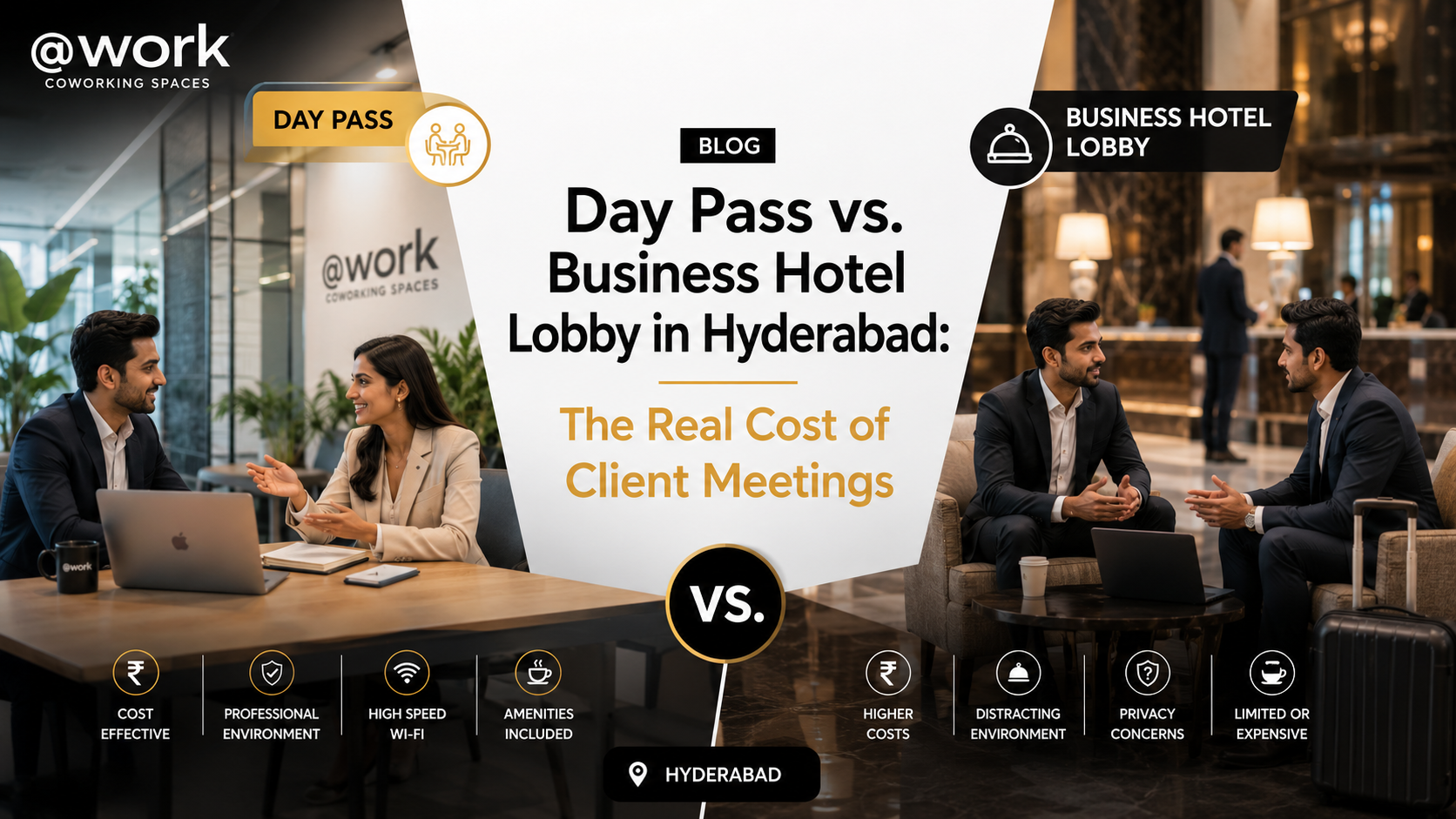
The first time I had to salvage a deal from a noisy hotel lobby in Madhapur, I knew the “free WiFi” wasn’t worth the professional cost. You know the scene: a pianist playing over a crucial negotiation, waiters interrupting every 15 minutes, and the distinct fear that your confidential data is leaking through an unsecured network.
Hyderabad’s commercial pulse demands agility, but it demands credibility even more. The choice between a polished hotel atrium and a dedicated day pass coworking space in Hyderabad often defines how your startup is perceived before the pitch deck is even opened.
We move fast in this city from the financial towers of Gachibowli to the startup hubs near Cyber Towers but speed should never sacrifice substance.
What Exactly Are You Paying For in a Business Hotel Lobby?
Most professionals equate premium hotel lobbies with success, but the transaction is purely transactional. When you pay INR 500 to INR 1,200 for a coffee and a corner seat at a five-star property in the Financial District, you aren’t paying for productivity; you are paying for a temporary address.
The background noise is curated, but the ergonomics are hostile. Those low-slung designer couches are perfect for a social drink, not for typing out a statement of work. I’ve noticed consultants struggling to plug in chargers, only to find the accessible outlets blocked by furniture.
Furthermore, hotel WiFi networks are shared public environments, often lacking the basic encryption needed to protect client NDAs or financial models from a simple man-in-the-middle attack. It’s a cosmetic solution to a structural problem.
The Hidden Privacy Void in Public Spaces
Acoustic privacy doesn’t exist in a lobby. During a recent strategy session near IKEA, I watched a legal advisor lower her voice repeatedly because acoustics carried every syllable across the marble floor.
Claiming a space in a hotel lobby means you are broadcasting your proprietary data to competitors who might be seated three tables away. When you are discussing unit economics or customer churn, that lack of confidentiality is a liability.
Coworking spaces in Hyderabad address this with a structural approach to sound management and closed-door meeting areas that a sprawling atrium simply cannot replicate.
Why a Coworking Day Pass Redefines Professional Agility
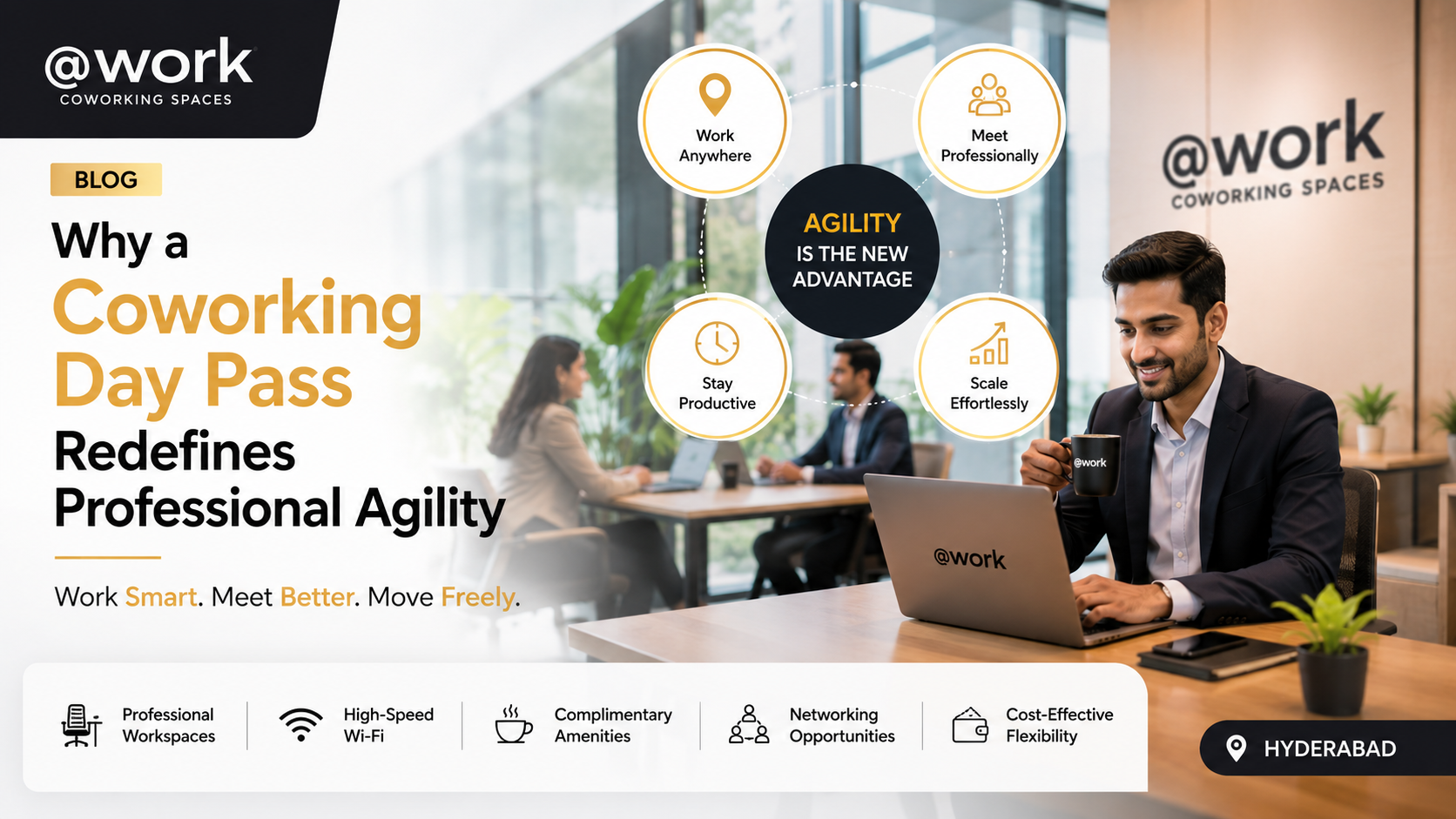
Key Takeaway: A coworking day pass is not just a desk; it is an instant infrastructure play that turns variable operational costs into a fixed, predictable asset that projects stability to demanding corporate clients.
Unlike a transient hotel seat, a day pass coworking setup is engineered for output. When I consult in HITEC City, I choose environments where the IT backbone matches my ambition. @Work Coworking Space provides a dedicated fiber optic line that doesn’t buckle under heavy video call loads a stark contrast to the 100-person shared bandwidth found in most hospitality venues.
You are moving from a consumption space to a creation space. The benefit is the ecosystem: seeing other founders closing rounds or developers pushing code creates a psychological momentum that isolation in a luxury hotel simply cannot buy. The flexibility of a day pass allows you to anchor in Gachibowli for a morning meeting and shift to a different, quieter zone in the afternoon without commuting, a fluidity the hospitality sector can’t touch.
Are You Really Saving Money with Free Lobby Access?
Let’s dissect the sunk cost fallacy of the “free” lobby meeting. The unspoken expectation is a running tab. A three-hour meeting might cost INR 1,800 in artisanal coffees and pastries for three people, and that doesn’t guarantee you a seat when the place gets crowded.
The mental overhead of “earning your seat” creates anxiety that undermines negotiation leverage. By contrast, our day pass memberships offer transparent pricing without a consumption guilt trip. You can find our offerings through flexible coworking plans in Hyderabad that provide predictable expense management.
You aren’t paying a premium for a luxury brand’s overhead; you are investing directly in the throughput of your business.
Comparing First Impressions: The Concrete Jungle vs. The Glass Facade
The psychology of a client arriving at a hotel is centered on leisure, even in a business property. They see a bar, a check-in counter, and tour groups. When they step into a well-designed workspace like the ones along the Outer Ring Road tech corridor, the visual cue is immediate: “This is where deals are executed.”
The symbolism of a dedicated office environment, even one used temporarily, tells a client your project is structured, funded, and serious. Hotels signal transience; a professional workspace signals permanence, even if you only hold a day pass. This distinction alone can justify an upgrade to a HITEC City office rental for a critical milestone meeting.
The Infrastructure Fallacy: Five-Star vs. Fiber Speed
Hotels are great at hospitality technology, not business continuity technology. There’s a critical difference. A hotel’s IT team prioritizes guest experience; a coworking operator prioritizes uptime. If your video conference drops because the hotel’s network gateway is throttling heavy uploads (common with large file transfers), your reputation takes the hit, not the concierge.
When I need to lock a client room for a board meeting, I rely on spaces designed for silent dial-ins and zero latency. Booking a meeting room for the day through a dedicated platform beats competing with a transient vacationer for bandwidth.
How Hybrid Professionals Leverage the Address Game
In a city spread as wide as Hyderabad, your location strategy matters. A virtual office address in the same building as your day pass usage creates a seamless front for enterprises that still perform legal due diligence.
You can host a stakeholder review in a top-tier conference room on the 3rd floor, while your GST registration points to the same commercial complex. This logistical consistency is impossible to forge with a hotel address; you cannot legally register a business to a hospitality HQ.
A dedicated visitor management system, professional lobby signage visible on Google Maps, and a proper receptionist who announces guests these operational layers are standard in a professional setup, but they are awkward anomalies when inserted into a hotel environment.
To see the difference in setup, you can visit @Work Coworking Space on Google Maps and observe the dedicated professional ingress versus a mixed-use hotel entry.
Reclaiming the Sound of Silence
A client’s ability to concentrate on your pitch directly impacts your closing rate. The ambient noise profile of a coffee boutique averages 70 decibels a level proven to induce subconscious stress.
Most business hotel lobbies mask this with white noise, which fatigues the ear over a two-hour meeting. In contrast, dedicated shared workspace solutions typically feature zoned sound masking and acoustically treated meeting pods.
This isn’t about luxury; it’s about neurological comfort. When a client’s brain isn’t fighting to filter out clinking cutlery, they process your data points faster. This environmental control extends to lighting. Hotel lobbies use warm, dim lighting for ambiance; workspaces use 4000K neutral white light designed to maintain alertness during detailed spreadsheet analysis.
Do Amenities Actually Matter for Closing Deals?
Yes, but not the ones hotels think. A spa is irrelevant to an investor memo. What matters is the accessibility and redundancy of the technology. A professional day pass coworking space thrives on what I call the “printing emergency” test.
At 9:55 AM, when you need 50 copies of a handout, hotels send you to a distant business center. A fully furnished office floor has a printer right there, maintained and full of paper. It’s the difference between a seamless start and a chaotic scramble.
Additionally, amenities like on-site parking for multiple clients without the INR 200 per hour valet fees of a star-rated property make your clients feel invited, not milked for incidental revenue.
Are Hotels Ever the Right Choice?
There is a sliver of utility for hotel lobbies: the 20-minute networking chat or the pre-dinner informal catch-up where a less formal setting is disarming. If the goal is to impress with luxury status symbols, a hotel has visual cachet.
However, for a working session where actual code, contracts, or financial models are reviewed, the hotel becomes a liability the moment an internet drop forces a hard reboot.
For those moments, you need a scalable office space that can expand from a day pass to a permanent setup without a pause in branding or operations. The seamless scalability of a private office for a day or a dedicated team space simply does not exist in the hospitality playbook.
Conclusion: The Metric That Wins Is Control
The battle between a hotel lobby and a coworking day pass is won on the axis of predictability. Hotels sell packages; @Work Coworking Space sells productivity certainty.
You cannot control the crowd, the noise, or the network in a public atrium, but you can engineer the perfect environment a few kilometers down the road in the city’s tech corridor.
Whether you need a plug and play office near the ORR or simply a quiet seat for four hours, the investment is in your brand’s reputation. Don’t let a slow WiFi signal speak for your bottom line. Explore our Hyderabad locations to find a space that treats your client meetings with the rigor they demand.
Frequently Asked Questions
Is a coworking day pass more expensive than a hotel lobby?
A coworking day pass offers fixed pricing without mandatory food bills, which often makes it cheaper. A three-hour hotel lobby stay usually incurs INR 800-1,500 in consumption costs, rivaling the cost of a fully equipped workspace that includes printing and high-speed internet. You pay for the facility, not just the seat.
Can I book a meeting room with a day pass?
Yes, most professional setups allow you to upgrade to a boardroom. While a day pass grants access to hot desks, you can easily book training rooms or boardrooms for private client sessions. This gives you the flexibility to scale your space needs hourly.
How does a virtual office complement a day pass?
A virtual office gives you a permanent mailing address for company registration on the same premises where you rent day passes. This consistency enhances trust during due diligence, as your legal address matches your physical meeting location. It eliminates the stigma of a residential or P.O. Box address.
Is WiFi speed really that much better in a coworking space?
Yes, business-grade fiber lines in workspaces offer dedicated, symmetrical 1:1 bandwidth designed for heavy uploads and downloads. Hotel WiFi is typically shared asymmetrical bandwidth, which throttles speeds when occupancy is high. This reliability prevents dropped Zoom calls during critical client presentations.
What if my client prefers the prestige of a 5-star hotel?
While hotels carry luxury prestige, they lack the professional industrial infrastructure that signals a focused business setup. A premium private office in a blue-chip tech tower often signals “serious operations” more effectively than a leisure brand. Savvy clients appreciate efficiency and privacy over a lobby’s marble finish.
Add a Comment